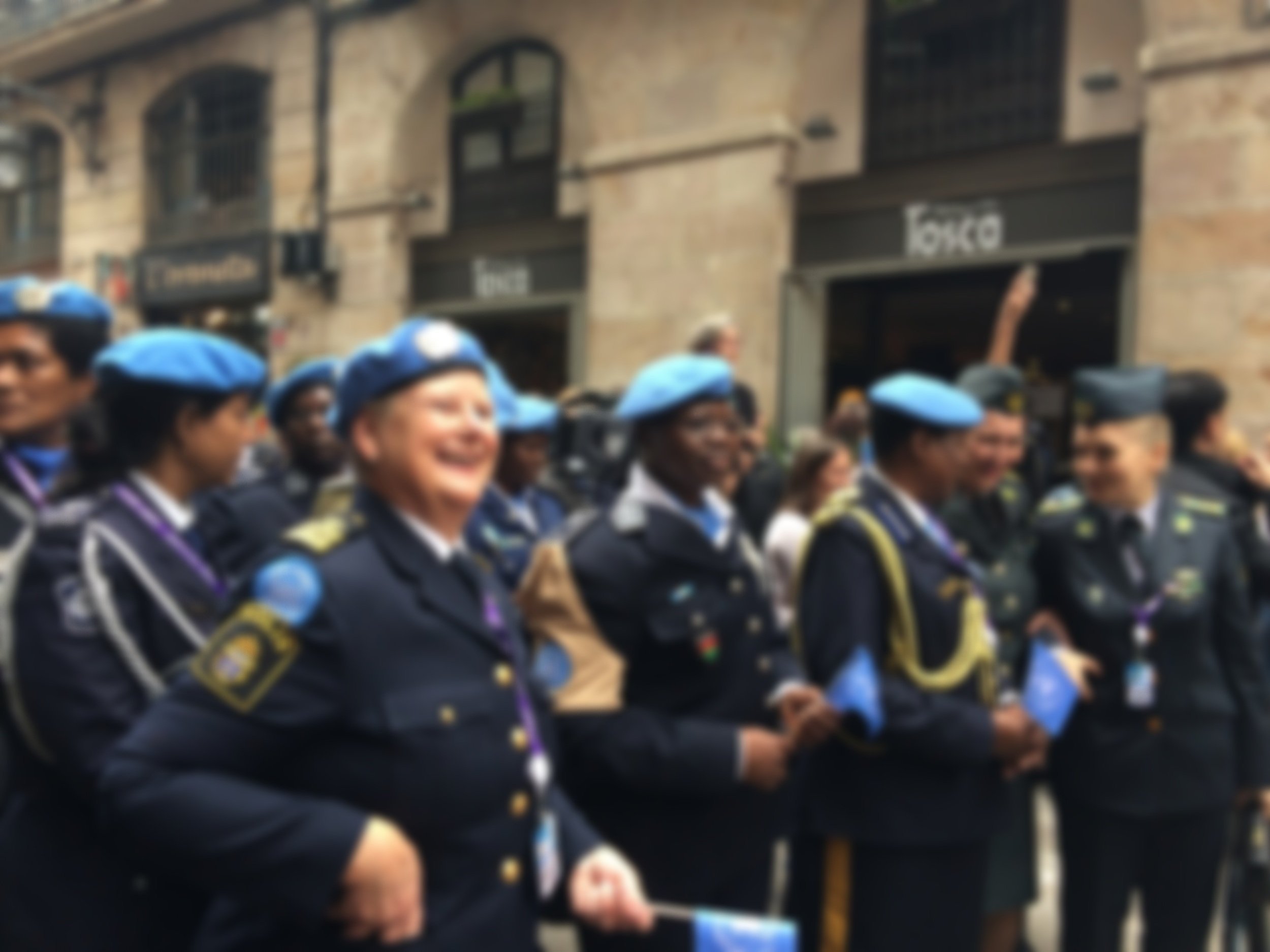
Women, Gender, and Peacekeeping
Research Overview
My research on women, gender and peacekeeping asks the following questions:
Under what conditions are women included in peacekeeping operations?
How does gender affect peacekeeping missions?
What explains variation in UN peacekeeper’s perpetration of sexual exploitation and abuse (SEA)?
Research methods: cross-national, times series analysis, interviews, lab-in-the field experiments
The research finds that while there has been a push to increase women’s inclusion in peacekeeping operations since UNSC 1325 (2000), progress is hampered by the many gendered barriers that female personnel face both in their home institutions and while deployed to peacekeeping operations. These include, among other barriers, a gendered protection norm, which makes female peacekeepers interactions with locals more difficult. It also includes rampant discrimination and harassment while on the mission. These barriers prevent female peacekeeper from reaching their full potential while deployed. While some practitioners and policymakers point to increased female presence as a way to reduce SEA, there is no evidence (nor is it the job of women to police the behavior of male personnel) to suggest that this is the case. Rather, we find that with more troop and police contributing countries that are more gender equal, there is less SEA. The research finds that peacekeeping missions are important drivers of gender reforms in the security sector, but that they also increase demand for transactional sex. Finally, there is some evidence that suggests that the UN’s zero tolerance policy for SEA could have harmful effects because it could increase sexual harassment and abuse of fellow female peacekeepers (because sex with locals is banned) and/or place more restrictions on interactions between peacekeepers and locals—these restrictions impact female peacekeepers more severely. See also the Gender and Security Sector Lab research.
Peer-Reviewed Published Research
-
Recent developments such as Sweden’s feminist foreign policy, the “Hillary doctrine,” and the integration of women into combat roles in the United States have propelled gender equality to the forefront of international politics. The UN Department of Peacekeeping Operations, however, has been integrating gender equality into peacekeeping missions for nearly two decades—as part of the women, peace, and security agenda that was most clearly articulated in UN Security Council Resolution 1325. To what extent have peacekeeping operations achieved gender equality within the peacekeeping missions and been vehicles for promoting gender equality in postconflict states? While there have been major improvements related to women’s participation and protection, there is still much left to be desired. The authors argue that gender power imbalances between the sexes and among genders place restrictions on the participation of women in peacekeeping missions. Specifically, discrimination, a relegation of women to safe spaces, and sexual exploitation, abuse, harassment, and violence (SEAHV) continue to threaten progress on gender equality. Using unique cross-national data on sex-disaggregated participation of peacekeepers and on the allegations of SEAHV, as well as original data from the UN Mission in Liberia, the authors examine the origins and consequences of these challenges. They also identify and examine how increasing the representation of women in peacekeeping forces and, even more important, enhancing a more holistic value for “equal opportunity” can enable peacekeeping operations to overcome the challenges posed by power imbalances and be more of an example of and vehicle for gender equality globally.
-
Since the United Nations Security Council adopted Resolution 1325 (2000), which is referenced in most of the mandates for peacekeeping authorizations and renewals as of its adoption, UN peacekeeping forces have begun a process of gender balancing. While we have seen an increase in the numbers of female peacekeepers during the decade 2000–2010 and variation in the distribution patterns of female military personnel, we do not know if female military peacekeepers are deploying to areas that are safest or to areas with the greatest need for gender-balanced international involvement. Because the decision-making authority in the allocation of peacekeeping forces rests with the troop-contributing countries, which might not have bought into the gender balancing and mainstreaming initiatives mandated by the UN Security Council, we propose and find evidence that female military personnel tend to deploy to areas where there is least risk. They tend not to deploy where they may be most needed—where sexual violence and gender equity has been a major problem—and we find only a modest effect of having specific language in the mandates related to gender issues.
-
Sexual exploitation and abuse (SEA) is an endemic problem in UN peacekeeping missions. It is not only a gross human rights violation, but also threatens to challenge the legitimacy of the peacekeeping mission and undermines the promotion of gender equality in host countries. We examine if the composition of peacekeeping forces along two dimensions – the proportion of women and the records of gender (in)equality in the contributing countries – helps explain variation in SEA allegations. Analysis of mission-level information from 2009 to 2013 indicates that including higher proportions of both female peacekeepers and personnel from countries with better records of gender equality is associated with lower levels of SEA allegations reported against military contingents. We conclude that substantial reductions in SEA perpetrated by peacekeepers requires cultivation of a value for gender equality among all peacekeepers – improving the representation of women may help but still stops short of addressing the root of the problem.
-
United Nations policy forbids its peacekeepers and other personnel from engaging in transactional sex (the exchange of money, favors, or gifts for sex), but we find the behavior to be very common in our survey of Liberian women. Using satellite imagery and GPS locators, we randomly selected 1,381 households and randomly sampled 475 women between the ages of eighteen and thirty. Using an iPod in private to preserve the anonymity of their responses, these women answered sensitive questions about their sexual histories. More than half of them had engaged in transactional sex, a large majority of them (more than 75 percent) with UN personnel. We estimate that each additional battalion of UN peacekeepers caused a significant increase in a woman's probability of engaging in her first transactional sex. Our findings raise the concern that the private actions of UN personnel in the field may set back the UN's broader gender-equality and economic development goals, and raise broader questions about compliance with international norms.
-
In the aftermath of civil conflict, war-torn states often require reform of their government institutions. Gender balancing, or the inclusion of more women in security-sector institutions, is an increasingly common reform incorporated into state-building processes. Our theoretical priors suggest that gender balancing may influence unit cohesion, operational effectiveness with respect to sexual and gender-based violence, and organizational gender norms. We study these propositions using laboratory experiments with police officers of the Liberian National Police (LNP). We randomly assigned the proportions of women and men in 102 groups of six LNP officers to observe their deliberative processes and group choices. In our experiment, adding more women increased unit cohesion, but we find no evidence to suggest that simply adding more women would increase group (or individual) sensitivity to sexual and gender-based violence. We also find that, despite an increase in participation and influence by women, male beliefs about women's role in policing do not improve with the inclusion of women. As one of the first experimental studies to assess the effects of gender composition within the actual population of interest, our results shed light on how international interventions to address gender equality in post-conflict countries affect important outcomes related to security.
-
Since the adoption of UNSCR 1325, more female peacekeepers are participating in peacekeeping missions than ever before. Nevertheless, the current literature on peacekeeping effectiveness is largely gender neutral, discounting the unique role female peacekeepers may play in peacekeeping operations. This article addresses this missing piece in the literature by assessing how female peacekeepers and locals view the role of women in peacekeeping operations. Using interviews and focus groups conducted with peacekeepers in the UN Mission in Liberia (UNMIL) and original surveys conducted in Liberian communities, it finds that there is an “access gap” that prevents female peacekeepers from fully contributing to the mission’s operations and therefore prevents the peacekeeping mission from reaching its full potential. The findings have broader implications for how to improve peacekeeping missions’ effectiveness moving forward.
-
As Kristina Daugirdas points out in her article on the role of reputation in international organizations (IOs), peacekeeping operations include a multitude of actors with varying interests. These actors have competing priorities, which forces IOs to balance the needs of the actors involved in peacekeeping missions. Because IOs often depend on member states as implementing agents, this could cause IOs to suppress their own interests in favor of member states, which could ultimately negatively affect the communities in which the peacekeepers operate. This dynamic is present in UN peacekeeping operations. While Daugirdas seeks to align the incentives of the UN and the states that contribute peacekeepers so as to harness reputation as a force to encourage the good behavior of all involved, I argue that this alignment rarely happens because of IOs’ reliance on member states. Through the dynamics of UN peacekeeping operations, I show that the UN reliance on states to provide police officers and troops suppresses the UN's own interests in favor of the contributing states’ interests. I also identify a carrots and sticks approach to balancing incentives. As Paul Stephan does in his essay for this symposium, I draw on a rational-choice, actor-based theory to identify the mixed motives of the various actors who staff and operate peacekeeping missions. The framework proposed here, I contend, provides a way to better understand the sources of the tension that exist when evaluating reputation as a disciplinary tool for IOs.
-
Item desGiven the continued presence of sexual exploitation and abuse (SEA) in peacekeeping missions, the UN endorsed a zero-tolerance policy to regulate sexual relations between peacekeepers and civilian populations. The policy has been criticized on the grounds that it undermines the agency of affected populations, pushes sexual activities underground, neglects the structural conditions that enable SEA and exacerbates the health risks affiliated with sex work. In this study, we push these debates further by examining how UN-endorsed sexual regulatory frameworks impact institutional decision-making surrounding female peacekeepers. We argue that strict regulation of sexual behaviors may limit women’s ability to meaningfully participate in peacekeeping operations. Drawing on cross-national interviews with peacekeeping decision-makers and surveys conducted with UN peacekeepers across four countries, we present evidence to suggest that the policing of sex can influence institutional practices surrounding female peacekeepers in two ways. First, it provides incentivizes and legitimizes domestic security institutions’ decisions to extend “protectionist” zero-tolerance policies to female peacekeepers. When taken to the extreme, this can be enforced through gender segregation models that generate a hostile socialization environment for women. Second, banning sex with civilian populations on-mission may inversely channel sexual demands towards female peacekeepers. Subsequently, this creates a hypersexualized work environment where the lines between sexual agency and abuse are obscured. These findings reinforce the need to reconsider policy frameworks governing sexual relations and raise urgent questions regarding the sexual agency of female peacekeepers.cription